



A 15-point checklist before buying a used generator
A 15-point inspection checklist for assessing a used diesel generator before you buy, from running hours and service records to the load test and the warning signs.
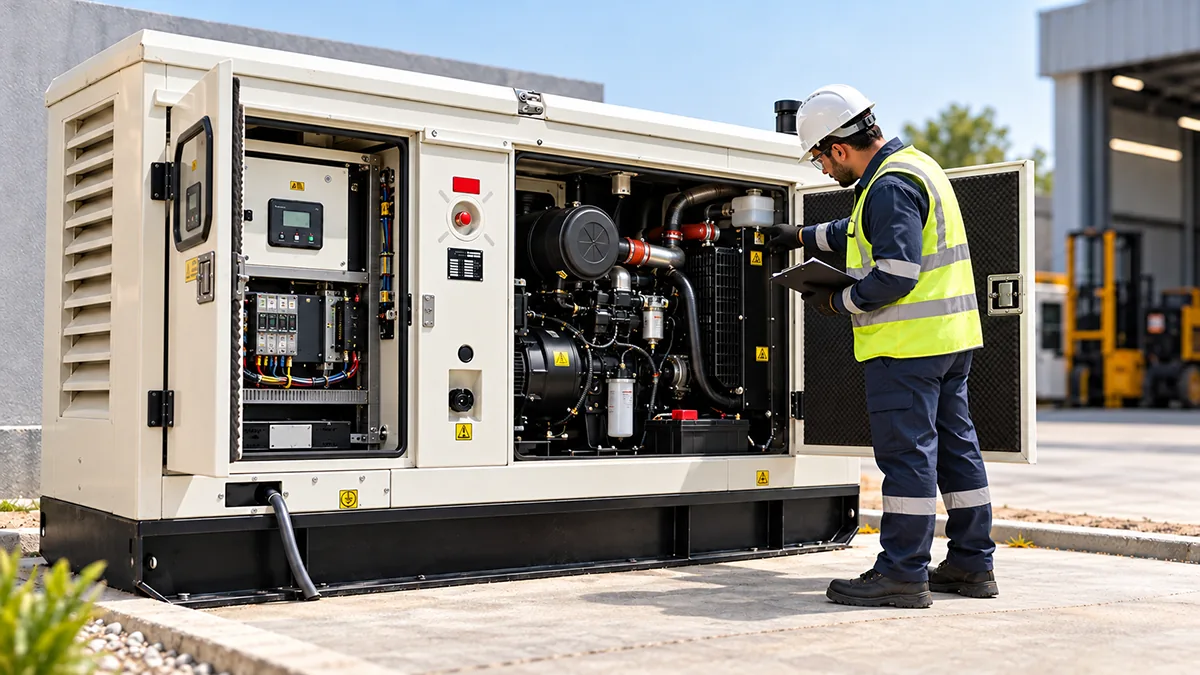
Before buying a used generator, check 15 points covering documents, engine and electrical system: running hours and service history, oil and coolant condition, leaks, exhaust smoke, oil pressure, battery, winding insulation, control panel and, above all, a real load test. Walk away from any unit the seller will not run under load.
Why does a used generator need a structured inspection?
Because appearance says little about the engine. A freshly painted unit may hide high oil consumption, low oil pressure or damaged windings, while a plain-looking set can be in excellent condition.
A structured inspection turns the decision from an impression into comparable figures, and it reveals likely repair costs before you pay rather than after. If you have not yet decided whether ownership is right for you, start with our buy vs rent comparison.
Which 15 points should you check before buying?
Work through the list below in order and note your findings on each point. Points 1 to 5 cover documents and general condition, 6 to 11 the engine, and 12 to 15 the electrical system and operation.
- Running hours: read the hour meter and compare it with the age of the unit and its service history.
- Service records: ask for the dates of oil and filter changes and any major repairs.
- Nameplate: match the serial number, kVA rating, voltage and frequency with what the seller is offering.
- Frame and base: look for deep corrosion, cracks or weld repairs on the base frame and engine mounts.
- Acoustic enclosure: check doors, locks and internal insulation for damage and moisture.
- Engine oil: very dark oil, a smell of fuel or a milky appearance can point to an internal problem.
- Coolant: traces of oil or rust are a warning sign, as is a steady loss with no visible leak.
- Leaks: inspect beneath the engine, fuel connections, hoses and the oil cooler.
- Cold start: ask for the engine to be started from cold, and listen for hesitation or unusual noises.
- Exhaust smoke: blue smoke suggests oil burning, persistent white smoke may indicate a coolant leak, and heavy black smoke a fuel, air or load problem.
- Oil pressure and temperature: record panel readings once the engine reaches operating temperature and compare them with the manual’s limits.
- Battery and starting system: check battery voltage and age, the starter motor and the battery charger.
- Winding insulation: an insulation resistance test with a megger reveals moisture or damage in the alternator windings.
- Control panel and protections: confirm that alarms, the emergency stop and the main breaker all work.
- Load test: run the set on a real load or a load bank and watch voltage and frequency stability.
How should you judge running hours?
Low running hours are an advantage, but their meaning depends on the age of the unit and how it was used. What matters is that the hours are plausible for the number of years and backed by a clear service record.
As a general reference, many industrial diesel engines running at 1500 rpm operate for 10,000 to 20,000 hours or more before needing a major overhaul, depending on the engine, the load profile and the standard of maintenance. The exact figure is set by the manufacturer’s manual.
On the other hand, a ten-year-old set showing very few hours deserves a closer look. The meter may have been replaced, or the unit may have stood idle for years without time-based servicing.
What should you watch during the load test?
The load test is the most important step on the list, because it is the only one that shows how the generator will actually perform for you. Ideally it is carried out in stages, as in the example below:
| Load step | Suggested duration | What to watch |
|---|---|---|
| 25% of rating | 15 minutes | Voltage and frequency stability, noise |
| 50% of rating | 15 minutes | Oil pressure, smoke colour |
| 75% of rating | 30 minutes | Coolant temperature, leaks |
| 100% of rating | 30 minutes | Carrying full load with no alarms |
Frequency should normally stay close to 50 Hz, and voltage within a narrow band around nominal. A significant dip or persistent black smoke at full load means the engine is not delivering its rated output.
Which warning signs should end the deal?
Walk away if the seller refuses to run the set or carry out a load test, or if there are signs of oil mixing with coolant. These faults can cost a large share of the generator’s value to repair.
- No service records at all, combined with implausible running hours.
- Persistent blue smoke, or heavy blow-by from the crankcase breather.
- Very low insulation resistance in the alternator windings.
- A missing nameplate, or figures that do not match the advertised specification.
- Metallic knocking from inside the engine under load.
If you would rather skip the inspection work, used generators from Alemtiaz come with a warranty on all parts, low running hours and regular servicing. Browse the available units on our used generators page, or send us the capacity you need through our request a quote page and receive a reply within an hour during working hours.
Frequently asked questions
It is recommended even with a good service record. Changing the oil and filters and checking the coolant and battery straight away gives you a clean starting point for your own maintenance schedule.
A used unit is sold as it stands after inspection and servicing, while a refurbished unit has been overhauled with major engine or alternator parts replaced. Always ask exactly which work was carried out and when.
A full inspection with a load test typically takes two to four hours, depending on the size of the set and the availability of a load bank. That is a small investment compared with the cost of buying the wrong unit.
Yes, because parts availability determines how easy the unit will be to maintain. Alemtiaz supplies spare parts for Perkins, Cummins, Caterpillar and Kirloskar engines, among the most widely used brands in Kuwait.
Fast reply
Get a quote within an hour
Tell us what you need and we will reply with a clear quote during working hours.
- A reply within an hour during working hours, Saturday to Thursday
- A clear quote that covers delivery, installation and commissioning
- Our technical team helps you choose the right capacity