



Diesel generator fuel consumption per hour by capacity and load
An indicative table of diesel generator fuel use in litres per hour by rating and load, with a simple runtime calculation and maintenance tips that cut fuel consumption.
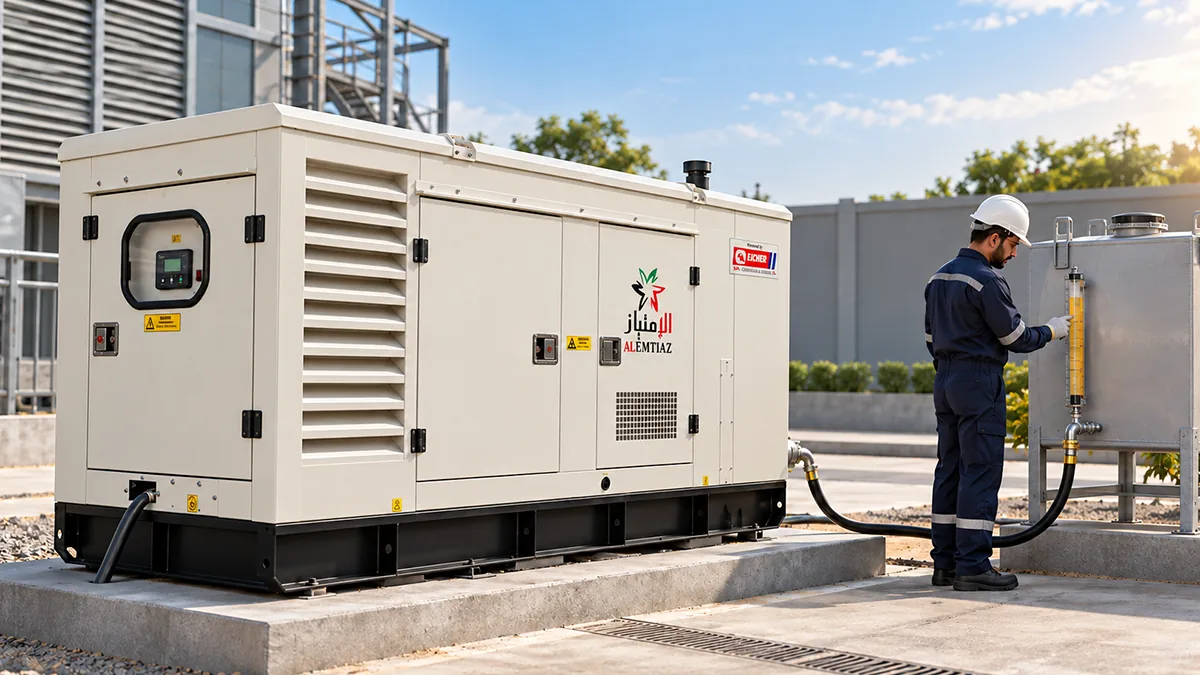
A diesel generator uses 0.27 to 0.3 litres per kWh at 75 to 100 percent load. A 125 kVA generator burns about 15 litres per hour at half load and about 28 litres at full load, while a 50 kVA unit uses about 7 litres per hour at half load. Exact figures depend on the engine, load and maintenance.
What determines a generator’s fuel consumption?
The single biggest factor is the actual load, not the rating on the nameplate: a generator burns fuel in proportion to the power it is asked to deliver. Engine size, efficiency and mechanical condition come next.
- Load level: a generator running at a quarter of its load uses about a third of its full load consumption, not a quarter.
- Engine design: modern electronically injected engines are generally more efficient than older designs.
- Mechanical condition: clogged filters and worn injectors push consumption up.
- Operating conditions: high temperatures and dust put extra strain on the engine and cooling system.
- Diesel quality: fuel contaminated with water or sediment burns less efficiently.
How many litres per hour does a generator use by capacity and load?
The table below shows typical values for diesel generators at a power factor of 0.8. Real figures vary with the engine, the load and operating conditions, so always check the manufacturer’s data for the specific model.
| Rating (kVA) | Rating (kW) | 25% load (litres per hour) | 50% load (litres per hour) | 75% load (litres per hour) | 100% load (litres per hour) |
|---|---|---|---|---|---|
| 25 | 20 | 2.3 | 3.4 | 4.9 | 6.1 |
| 50 | 40 | 4.5 | 7.1 | 9.6 | 12.0 |
| 75 | 60 | 6.8 | 11.0 | 14.4 | 18.2 |
| 125 | 100 | 9.8 | 15.5 | 22.0 | 28.0 |
| 250 | 200 | 15.5 | 28.0 | 40.1 | 54.5 |
| 500 | 400 | 29.9 | 56.4 | 82.1 | 112.4 |
As a rule of thumb, a diesel generator at 75 to 100 percent load uses about 0.27 to 0.3 litres per kWh generated, and that ratio rises as the load falls.
The table also shows that consumption does not rise in step with load. A 125 kVA generator uses about 9.8 litres per hour at a quarter load and about 28 litres at full load, less than three times as much for four times the output. That is why the cost of each kWh falls as the load moves into the ideal operating range.
How do you calculate your generator’s consumption and runtime?
Multiply the average real load in kW by about 0.3 litres to estimate hourly consumption, then divide the tank capacity by that figure to find the runtime.
- Establish the average real load, for example 40 kW on a 75 kVA generator.
- Multiply 40 by 0.3 to get about 12 litres per hour.
- With a 200 litre tank, the runtime is roughly 16 hours.
- Keep a reserve of at least 10 percent of the tank so the engine does not draw sediment or air from the bottom.
The most accurate method is to measure real consumption: fill the tank, run the generator for a known number of hours, then refill and record the quantity added.
Why is running a generator at very light load harmful?
Running a diesel generator below 30 percent of its rating for long periods lowers hourly consumption but raises the cost of each kWh and harms the engine. At light load, combustion temperatures stay too low, so unburnt fuel and carbon build up in the cylinders and exhaust, a condition known as wet stacking.
Saving fuel therefore starts with choosing the right capacity, as we explain in our guide to sizing a generator. The ideal range for daily operation is usually 50 to 80 percent of the rated output.
How does regular maintenance reduce fuel consumption?
A well maintained engine uses less fuel and delivers steadier power, and most unexplained increases in consumption trace back to deferred maintenance. Many operators notice a generator drinking more diesel well before any obvious fault appears, which is the first sign it needs inspection.
- Replace air filters regularly, especially in dusty conditions.
- Change fuel filters and the water separator on schedule.
- Inspect and calibrate injectors and the fuel pump.
- Change the oil at the interval set by the manufacturer.
- Check the cooling system and keep the radiator clean.
Alemtiaz supplies generator spare parts for Perkins, Cummins, Caterpillar and Kirloskar engines, from filters to fuel system components.
How do you keep stored diesel in good condition?
Diesel stored for long periods is exposed to condensation and contamination, so tanks should be kept full and well sealed, with water drained from the bottom regularly. For standby generators that rarely run, test the fuel periodically and replace it if sediment appears or the colour changes.
If your generator’s consumption has risen or it is producing black smoke, it needs a technical inspection. The Alemtiaz team provides scheduled maintenance and emergency service within 24 hours. Request a quote for a maintenance contract from our generator maintenance page.
Frequently asked questions
Yes. The engine burns fuel just to keep turning, even without an electrical load, and long periods of no load running cause deposits in the engine, so switch the generator off when it is not needed.
It is usually caused by overload, a blocked air filter or injectors that need calibration. It indicates incomplete combustion, which raises fuel consumption and calls for an inspection.
Follow the manufacturer's schedule based on running hours, and change it sooner in dusty conditions or if fuel quality is in doubt.
Usually, yes. Air conditioning raises the load in summer, and high temperatures add strain to the engine and cooling system.
Fast reply
Get a quote within an hour
Tell us what you need and we will reply with a clear quote during working hours.
- A reply within an hour during working hours, Saturday to Thursday
- A clear quote that covers delivery, installation and commissioning
- Our technical team helps you choose the right capacity